The garden functions as a space of experience, shaped by movement, light, and time.
Design is not only about arranging elements, but also about how one moves through and pauses within the space.
Relationships between successive spaces are key to perception.
Transitions, openings, and moments of pause create a rhythm that guides the user through the garden.
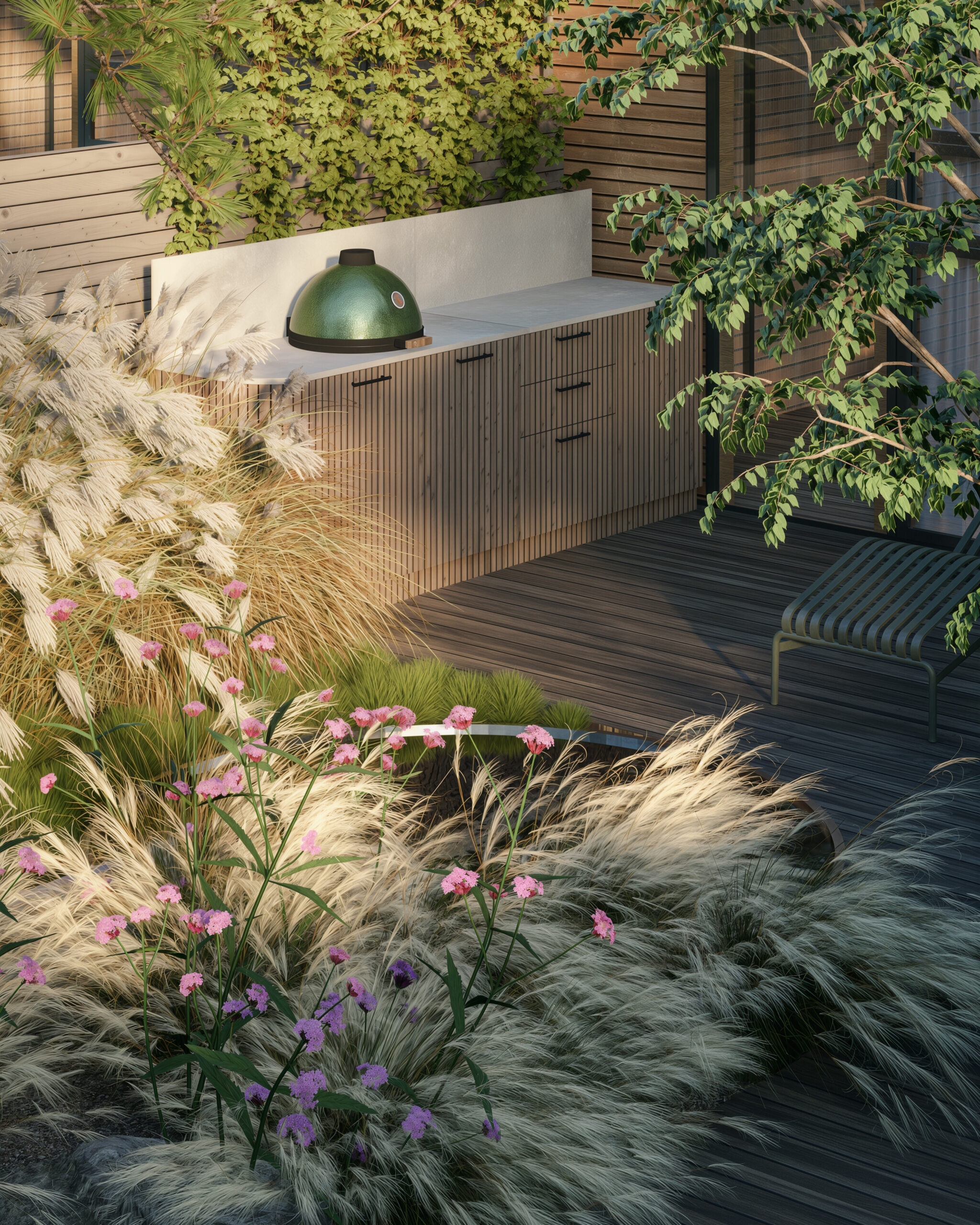
Elements such as water, fire, or resting areas introduce distinct atmospheres and structure how the garden is used.
Their placement influences how the space is discovered and how intense the experience becomes.
Some elements are positioned further away from the building, naturally extending movement and introducing new stages of use.
The garden unfolds as a sequence of places, each responding to changing conditions.
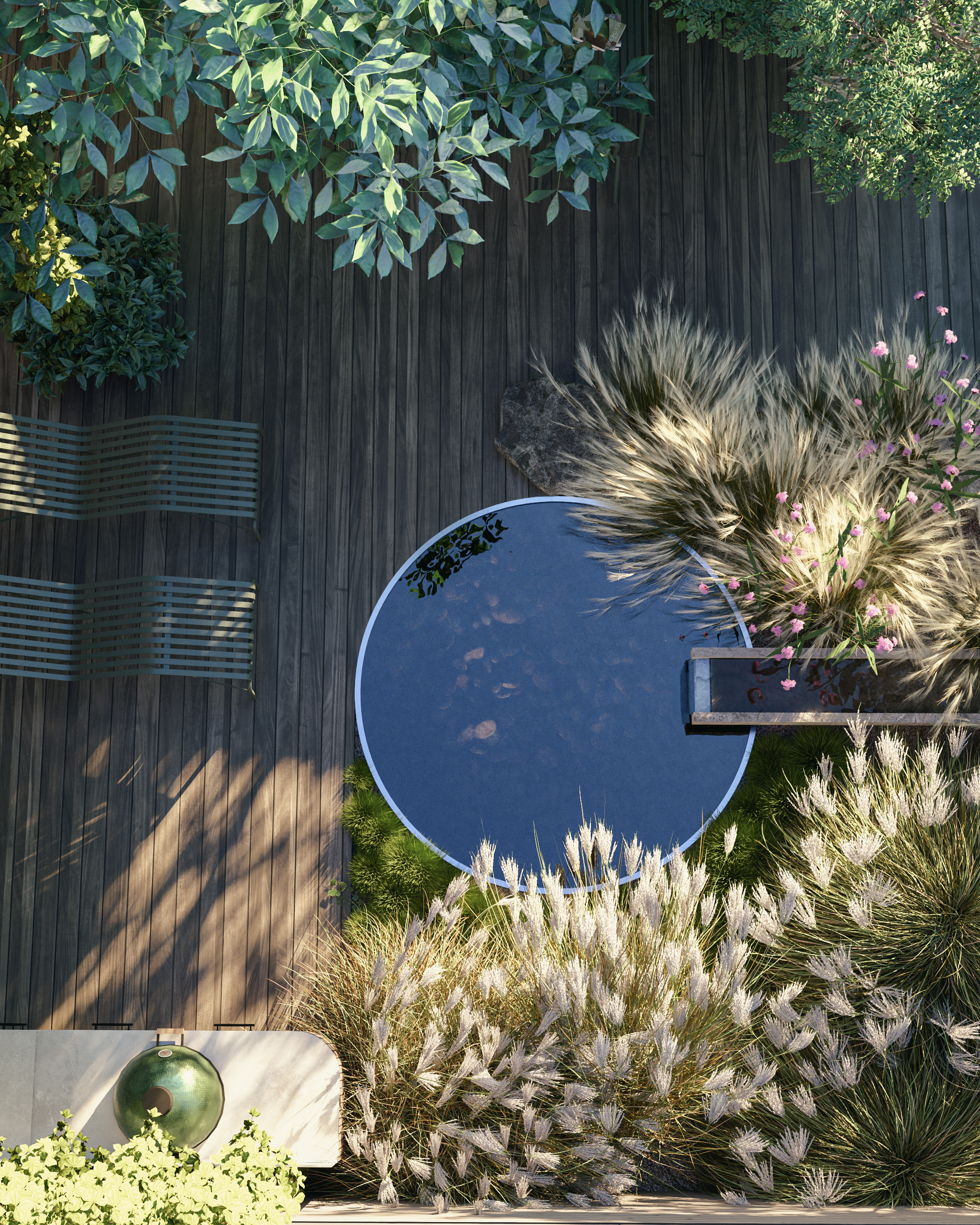
Light, time of day, and temperature shape perception and function.
The garden remains dynamic, changing with context.
In our work, we focus on the quality of experience.
It is this that defines the user’s relationship with the garden and determines its value over time.